Press Release: Tuesday 23 February 2021
Update to Vaccine Allocation Strategy
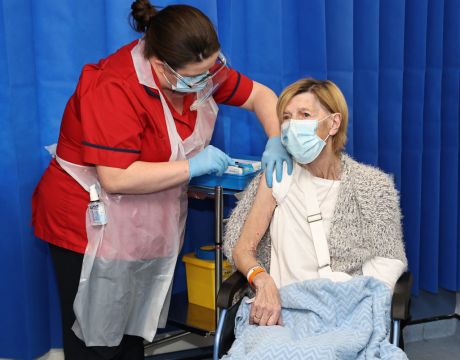
The Minister for Health, Stephen Donnelly TD has today announced an update to Ireland’s COVID-19 Vaccine Allocation Strategy.
The Government approved the Provisional Vaccine Allocation Strategy on 8 December last year. It was noted at the time that the Strategy would be kept under review and amended as a result of changes to existing evidence and/or the epidemiological situation.
“The National Immunisation Advisory Council (NIAC), in conjunction with Department, of Health have recommended revising the Vaccine Allocation Strategy. The National Public Health Emergency Team (NPHET) endorsed the recommendations and today they have been approved by Government.”
“The primary aim of Ireland’s COVID-19 Vaccine Allocation Strategy remains the same. We are continuing to vaccinate those who are most likely to suffer severe disease and sadly, death, as a result of contracting COVID-19. The changes we are making are based on the latest clinical and medical advice that those we are moving up the list would suffer the worst outcomes if they were to get the disease.”
In comprising the initial Vaccine Allocation Strategy, the NIAC listed several conditions associated with increased risk of severe disease and death.
In the intervening period, national and international evidence has become available which has enabled a more detailed analysis of underlying conditions that may increase the risk of developing severe disease or death.
NIAC has now been able to more comprehensively identify those medical conditions and to distinguish between those which place a person at very high or high risk of severe disease if they contract the virus.
Medical conditions and the magnitude of the risk they pose will continue to be monitored and periodically reviewed.
“It also upholds the principles of minimising harm and fairness that underpin Ireland’s COVID-19 Vaccination Programme by aiming to reduce the disproportionate burden those with underlying conditions face in terms of adverse outcomes from COVID-19.”
“The NIAC continues to monitor data around this disease and indeed emerging data on effectiveness of vaccines on a rolling basis.”

ENDS
Notes to Editor
- The proposed changes to the Vaccination Allocation Strategy ……to reduce morbidity and mortality, thereby protecting the healthcare system.
- Those aged 16-69 with a medical condition that puts them at very-high risk of severe disease and death will be Cohort 4 and be vaccinated directly after those aged ≥70 and living in the community.
- Cohort 5 will consist of those aged between 65 and 69 whose underlying condition puts them at a high risk of severe disease and death.
- Cohort 6 will comprise those aged 65-69. They will be vaccinated alongside healthcare workers who are not in a patient facing role. Key workers essential to the vaccine programme will also be included in this cohort.
- Cohort 7 will consist of those aged 16-64 who have an underlying condition that puts them at high risk of severe disease and death.
- NIAC has also recommended that while any of the three currently authorised vaccines can be given to adults aged 16-69, mRNA vaccines should be preferentially given to those aged 16-69 years at very high or high risk who have certain medical conditions which may limit their immune response to the vaccine.
- Preferential selection of an mRNA vaccine should not result in a vaccine delay of more than 3 weeks, as any benefit of using a higher efficacy vaccine may be lost.
| New Cohort 4 Those aged 16-69 and at very high risk of severe COVID-19 disease | |
| Cancer | All cancer patients actively receiving (and/or within 6 weeks of receiving) systemic therapy with cytotoxic chemotherapy, targeted therapy, monoclonal antibodies or immunotherapies and radical surgery or radiotherapy for lung or head and neck cancer All patients with advanced/metastatic cancers |
| Chronic kidney disease | Chronic kidney disease, on dialysis, or eGFR <15 ml/min |
| Chronic neurological disease or condition | Chronic neurological disease or condition with evolving ventilatory failure (requiring non-invasive ventilation) e.g. motor neurone disease, spinal muscular atrophy |
| Chronic respiratory disease | Chronic severe respiratory disease e.g. severe cystic fibrosis, severe COPD, severe pulmonary fibrosis |
| Diabetes | Uncontrolled diabetes e.g. HbA1C ≥58mmol/mol |
| Immunocompromise | Severe immunocompromise due to disease or treatment e.g. Transplantation: – Listed for solid organ or haematopoietic stem cell transplant (HSCT) – Post solid organ transplant at any time – Post HSCT within 12 months Genetic diseases: – APECED** – Inborn errors in the interferon pathway Treatment: – included but not limited to Cyclophosphamide, Rituximab, Alemtuzumab, Cladribine or Ocrelizumab in the last 6 months |
| Inherited metabolic diseases* | Disorders of intermediary metabolism/at risk of acute decompensation e.g. Maple Syrup Urine Disease |
| Intellectual disability* | Down Syndrome |
| Obesity | BMI >40 Kg/m2 |
| Sickle cell disease* |
| New Cohort 5 Those aged 65-69 and at high risk of severe COVID-19 disease Revised Cohort 7 Those aged 16-64 and at high risk of severe COVID-19 disease | |
| Cancer | Haematological – within 1 year Haematological – within 1 – 5 years Non-haematological – within 1 year All other cancers on non-hormonal treatment |
| Chronic heart (and vascular) disease | Chronic heart disease e.g. heart failure, hypertensive cardiac disease |
| Chronic kidney disease | Chronic kidney disease with eGFR <30ml/min |
| Chronic liver disease | Chronic liver disease e.g. cirrhosis or fibrosis |
| Chronic neurological disease or condition | Chronic neurological disease or condition significantly compromising respiratory function and/or the ability to clear secretions e.g. Parkinson’s disease, cerebral palsy |
| Chronic respiratory disease | Other chronic respiratory disease e.g. stable cystic fibrosis, severe asthma (continuous or repeated use of systemic corticosteroids), moderate COPD |
| Diabetes | All other diabetes (Type 1 and 2) |
| Immunocompromise | Immunocompromise due to disease or treatment e.g. high dose systemic steroids (as defined in Immunisation Guidelines for Ireland Chapter 3), persons living with HIV |
| Inherited metabolic diseases* | Disorders of intermediary metabolism not fulfilling criteria for very high risk |
| Intellectual disability* | Intellectual disability*** excluding Down Syndrome |
| Obesity | BMI >35 Kg/m2 |
| Severe mental illness* | Severe mental illness e.g. schizophrenia, bipolar disorder, severe depression |
*additional or updated medical conditions
** APECED – autoimmune polyendocrinopathy candidiasis ecto- dermal dystrophy
*** WHO definition of intellectual disability as “impairments in adaptive, social, and intellectual functioning (IQ<70), requiring daily support, with onset in the developmental phase (<18 years)”
| New Cohort 6 These groups will be completed in parallel | |
| Group | Rationale |
| All others aged 65-69 | At high risk of hospitalisation and death |
| Other Healthcare Workers not in direct patient contact | Provide essential health services, protect patients |
| Workers key to the vaccination programme | Provide services essential to the vaccination programme |
 Tom O'Leary 2021